Cadaver: Material
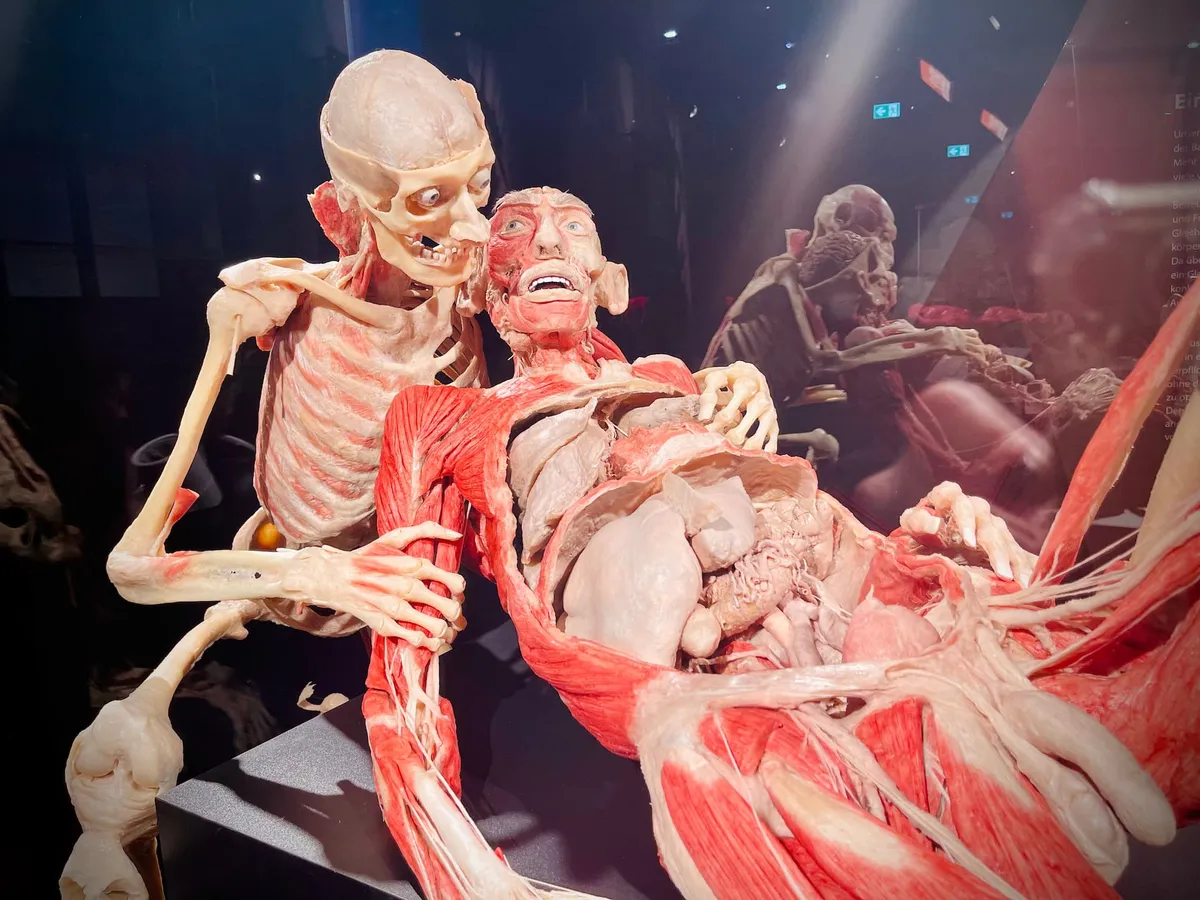
I spent hours with dead friends two months after my mastectomy. I went to Körperwelten for two reasons. I wanted to understand what had happened to my body, and I was researching the history of motion capture technologies for a project called Cadaver in the Machine. I met cadavers, learned about plastination, and saw fascia for the first time.
During plastination, a body is dehydrated. Water and fat are replaced with acetone. Inside a vacuum chamber, liquid polymer is drawn into the body. It isn’t simply injected. The vacuum pulls it through the tissues. Then the body is positioned and cured.
Six weeks after top surgery, I went back for a check-up. Everything was healing well. Then the surgeon looked at my chest and said that she'd needed to remove a lot of tissue to get it flat. I already knew that. I'd spent months preparing, reading about the procedure, looking at results, signing forms. Of course tissue would be removed. But when she said it, something was different: it was the way she looked at my chest before she looked back at me. Her tone.
How do I find continuity again, now that part of me is gone?
I had known someone was going to cut through my chest, that something was going to be removed. Trusting a person enough to let them do that was terrifying, not because I doubted her skill, but because some part of me was afraid I was doing something terrible to myself.
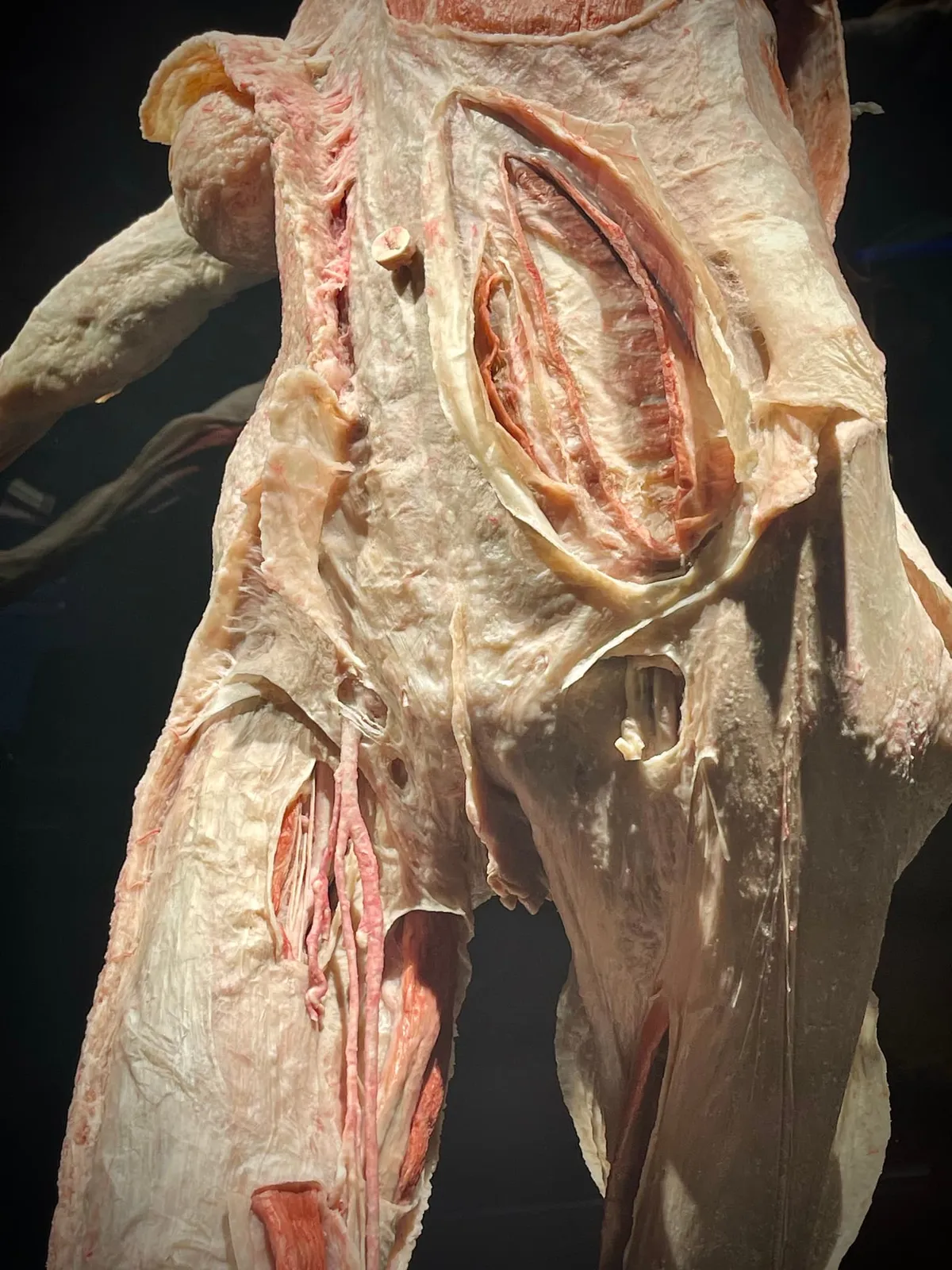
Before the operation, I used to imagine opening my chest to cleanse my heart. It was the picture I carried through the months of waiting. In front of the plastinated bodies, that picture started to come apart. The chest stopped being one symbolic place where feeling lived. It unfolded into layers: skin, fat, fascia, muscle, vessels, nerves.
Something had actually been removed.
The surgeon hadn't cut through my chest. She had cut through something that was in continuity.
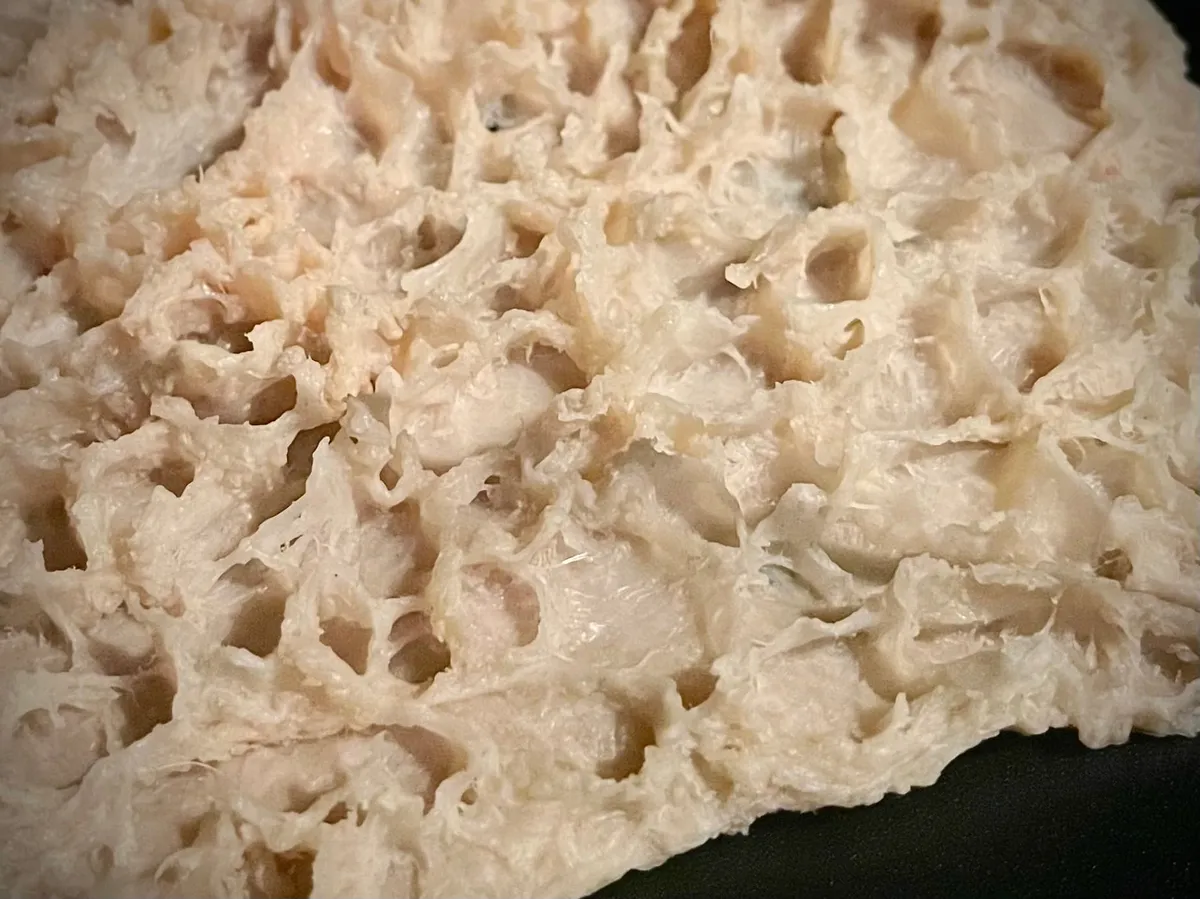
I'd heard the word fascia before. Some connective tissue. Not like the heart or the brain or the bones. It looks insignificant.
Like stretched mozzarella. Almost boring. You peel it away to get to the muscles.
I stood in front of it much longer than I expected to, looking at the membrane before I read the panel beside it. Something had been inside every movement I'd ever made, and I was only seeing it now, two months postop.
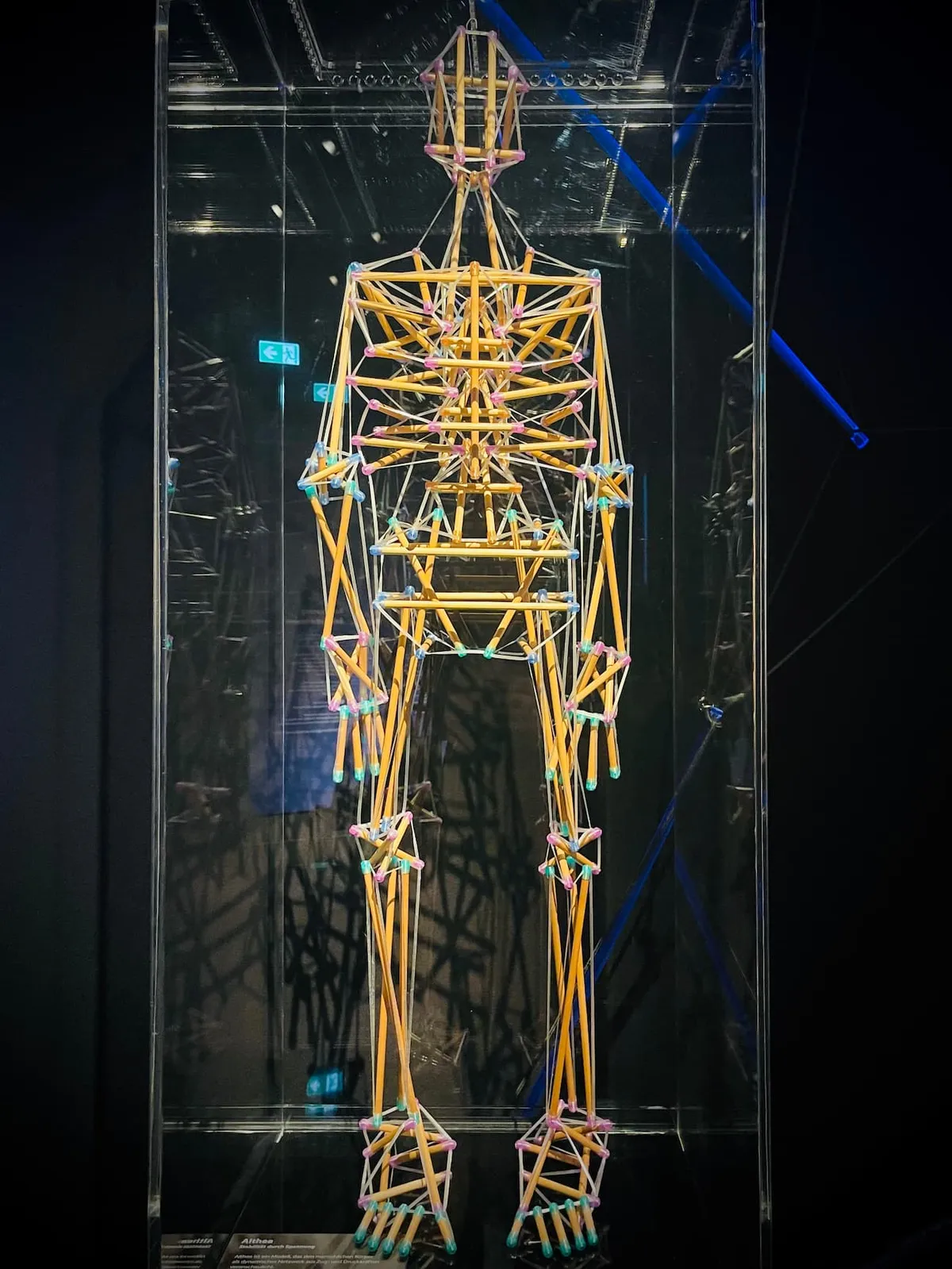
Then I stopped at a model about tensegrity: the idea that stability doesn't come from rigidity, but from a continuous balance of tension and compression distributed through an entire structure. I realized I had been touching my chest again without noticing.
How does a body reorganize itself after irreversible change?
Surgery had happened before I understood it. I've been told to do lymphatic drainage massage: the lymphatic system drains fluid, surgery interrupts it, the fluid has to find new pathways. Healing had begun before I understood it. Maybe reorganization works the same way. It starts before you catch up to it.
I left the last room slowly: exploded view of plastinated organs, seven meters of intestines, sliced brains, spinal cord descending into thousands of branching nerves. It did not exactly explain what had happened to me two months ago. But I kept touching my flat chest anyway, half-absent, checking that something was still there.
I'd been calling it a wound.
Standing among the dead, I'm not sure that's the right word.
Photos taken at
Körperwelten