Annotation: Conversation
I love annotating books. Irreverently. With diagrams and research notes. When I open a book after months of not touching it, I often laugh, trying to understand what I was thinking at the time.
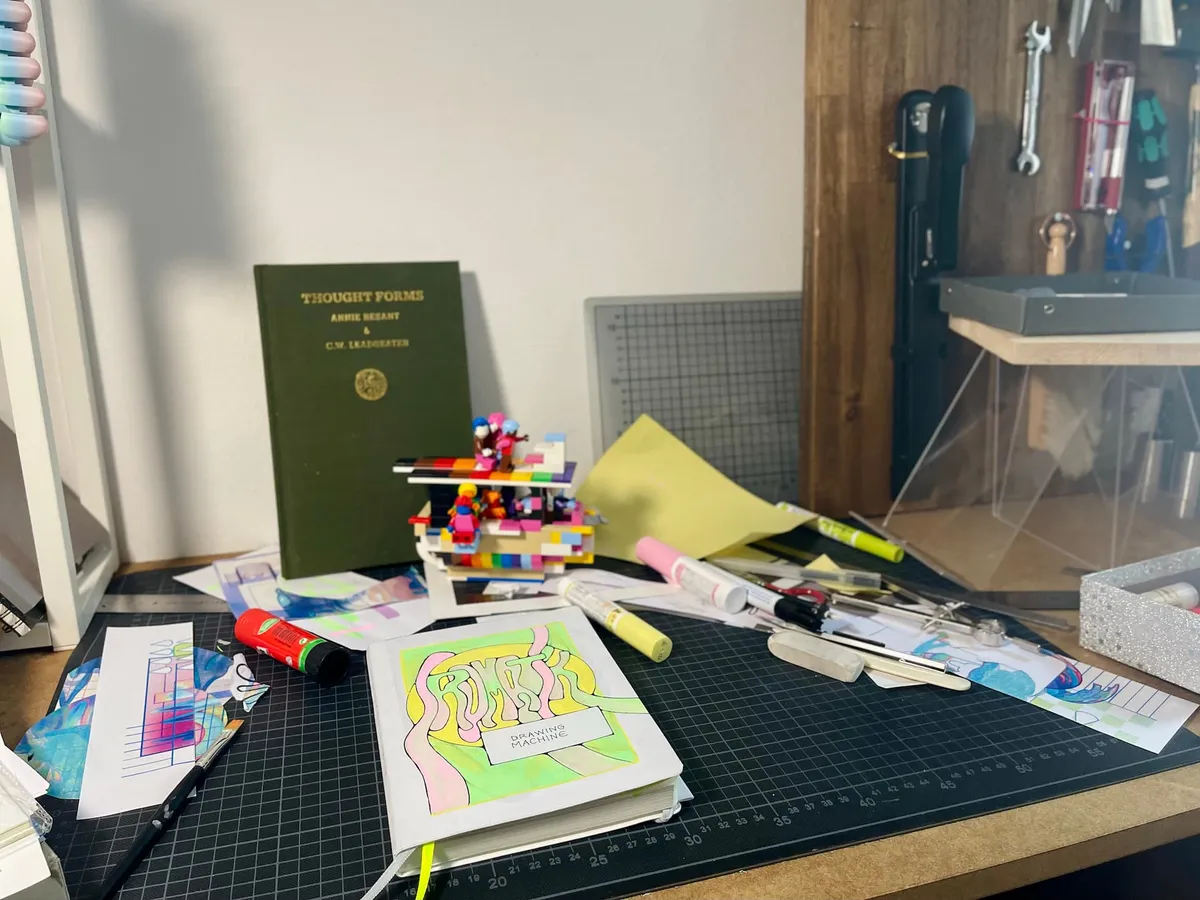
I opened the 1905 book Thought Forms by Annie Besant and C.W. Leadbeater because I’m working on my drawing instrument research. I’m trying to include strangeness in the machine. This woo-woo book, relevant to the history of visual abstraction in Western art, seemed like the right friend.
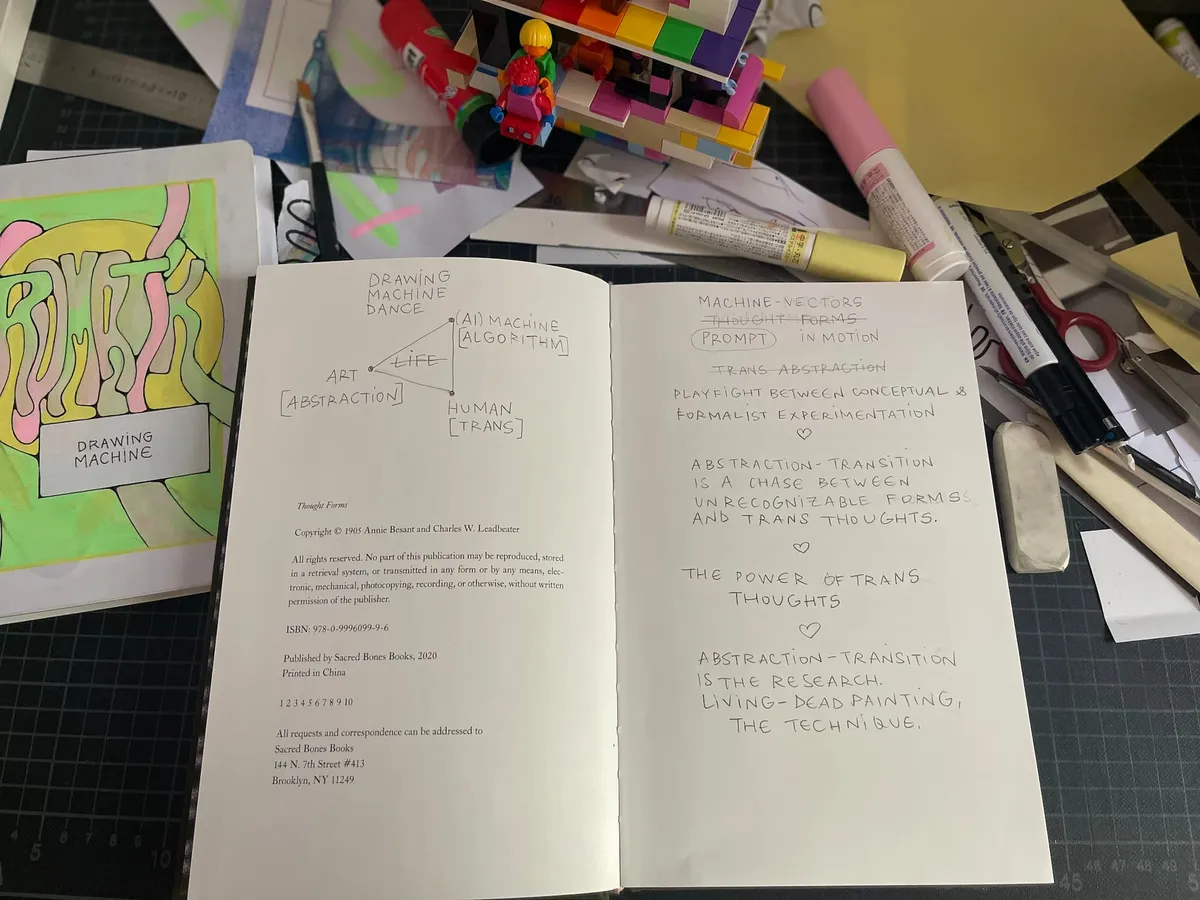
Instead I ended up meeting my younger self. On the first page: diagrams. Arrows. Fragments. And, unexpectedly, an explanation of the drawing instrument I’m building now. I’d forgotten I’d already started answering the question.
I know I keep orbiting the same questions in different forms. It’s how I find out what actually matters. Not by optimizing or deciding in advance, but by noticing what keeps coming back. I don’t know what’s important when I begin. Repetition tells me.
Annotations are conversations across time.
I don’t annotate books only to remember what the author said. I annotate them to leave traces for a future version of myself. Every now and then I open an old book and discover that a previous version of me had already given form to something I wasn’t yet ready to understand. When I draw diagrams or write phrases in the margin, I’m not synthesizing information. I’m giving form to something happening in my body: an exciting thought, too impatient to wait until I’ve finished reading. I sketch it in any free space available. Only then can I return to the book.
Marginal notes don’t tell me what I read. They tell me how I was thinking. They’re unfinished thoughts waiting for someone to continue them.
It’s a game I play with myself. And I love it.
Writing this note, I realize my annotations don’t just create conversations across time. They also create conversations across books. I’ll write more about that another day.
Last edited: 2026.06.29